A narrow alley in Torremolinos became Spain's first free space for gay people — seven years before Stonewall. Here is the history, the town as it is today, and how the coast fits with a week with us inland.
Most people know Torremolinos as a beach town of tower blocks and English breakfasts. In the 1960s it was something else entirely: the one place in Spain where you could be openly gay without hiding — while the rest of the country lived under Franco.
It lasted nine years. Then it closed in a single night.
The story is not well known outside Spain, and it deserves better. It also explains why Torremolinos is still the gay town of this coastline — and why a couple of streets here matter to a lot of people.
Pasaje Begoña is a small L-shaped alley in the middle of Torremolinos. In the closing months of 1962 the first bars opened there where gay people could gather freely — the first of their kind anywhere in Spain.
In under a decade it grew to at least fifty bars and live music venues in that single alley: flamenco, jazz, rock and folk side by side. Tourists came from across Europe and the United States. Hollywood stars, writers and European royalty walked the same streets.
That it was possible at all had nothing to do with tolerance. It had to do with foreign currency. Tourism brought money into a poor country, and the regime wanted to show the world a modern Spain. As long as it stayed inside Torremolinos, the authorities looked the other way.
On the night of San Juan in 1971, police raided Pasaje Begoña. It ended nine years of freedom, and the aftermath lasted for decades.
The raid caught over three hundred people in a single night. It was not one bar, but the whole alley.
Those arrested were taken to Málaga. Witnesses remember them in the courtyard of the Palacio de la Aduana — today the city museum.
Dozens of foreigners were expelled from Spain. Freedom had drawn them there; now it was the reason they were sent home.
Everyone identified had a police file opened on them and was told they were being watched. It followed people for years.
The basis was the Ley de Peligrosidad Social, which had replaced the old vagrancy law and turned homosexuality into a question of 'social danger'.
Many venues were closed for good. Part of the scene went back into hiding, and the town's golden tourist years took a blow at the same time.
For decades the story stood still. The alley was renamed in the 1980s, the bars were gone, and while Stonewall became a global reference, Pasaje Begoña quietly fell into disrepair.
That changed when a local association began digging through archives and tracking down the people who had been there. Today the site is officially recognised as a place of historical memory and as the birthplace of LGBTI rights in Spain.
The alley is renamed Pasaje Gil Vicente. The name Begoña disappears from the map — and the history with it.
Asociación Pasaje Begoña is founded and begins gathering testimony and archive material.
During WorldPride in New York the association forms a twinning with the Stonewall Inn Foundation.
Another twinning follows, this time with the onePULSE Foundation in Orlando.
The Spanish Congress and the Andalusian Parliament recognise Pasaje Begoña as a place of historical memory and the birthplace of LGBTI rights in Spain.
Stories from a town where, for nine years, anything was possible.
Witnesses from the time recall John Lennon sitting on one of the alley's terraces with Beatles manager Brian Epstein, watching people go by. The story is oral history — but it is told by people who were there.
Pasaje Begoña is named after the daughter of the man who built the block. No political gesture — just a father and his daughter.
It is an alley you can walk through in half a minute. In nine years it held at least fifty venues.
The tourism of the era was sold on sun, sea, sand and sex. The last S was the reason some people dared to travel here at all.
The Spanish press often calls the site Spain's Stonewall. Chronologically Torremolinos came first: the bars opened in 1962, seven years before the New York riots.
The scene is still in Torremolinos, a couple of hundred metres from where it began. Everything sits close together: bars, beach and promenade are a fifteen-minute walk apart.
The heart of the scene. An open shopping complex in the middle of town where bars and clubs are packed into a square around the plaza. Most of the nightlife happens here.
Across the road, around Calle Danza Invisible and Calle Casablanca, sits a smaller cluster of venues. A few minutes' walk from La Nogalera.
There are two gay beach clubs on the shore, both walkable from the centre. Sunbeds, food and music all day — this is where the afternoon goes.
The Paseo Marítimo runs along the water from Bajondillo to the old fishing quarter of La Carihuela, where the classic beach restaurants are. Walk it at sunset.
The town's pedestrian street, five minutes from La Nogalera. Shops, ice cream and people watching people — the daytime opposite of the evening.
Torremolinos Pride fills the town, and several large gay festivals follow across the summer. The dates move from year to year — check the official programme before booking flights.
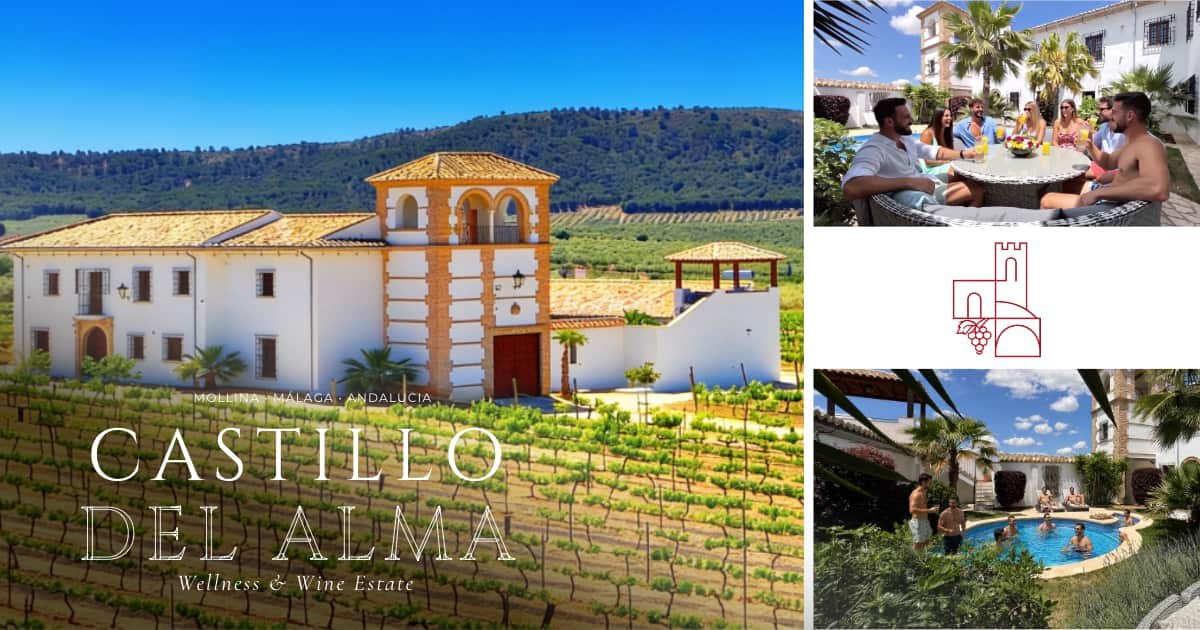
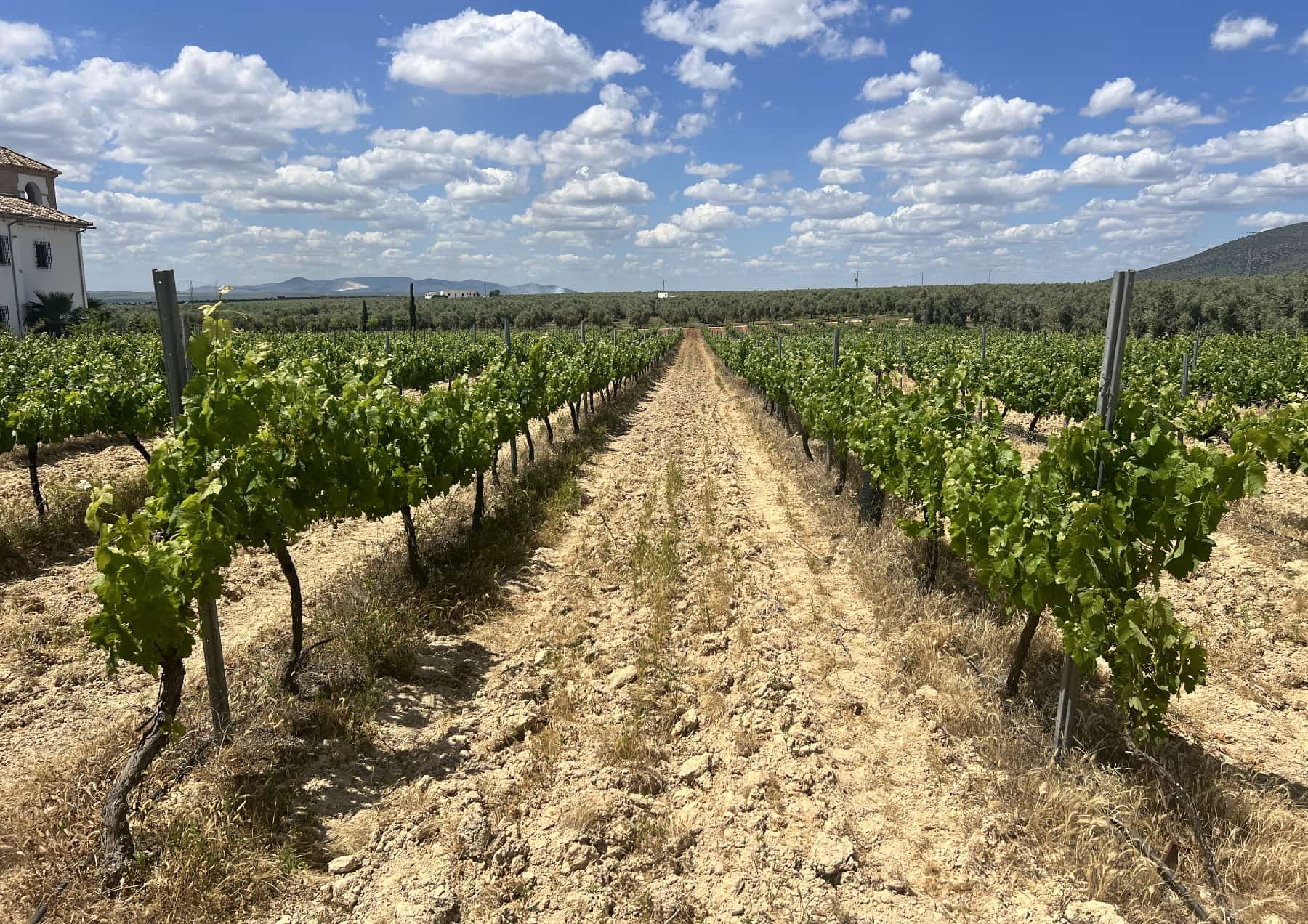
Castillo del Alma is an hour's drive inland from Torremolinos. Close enough for a day trip or an evening out — far enough away that the week actually feels like a retreat.

An hour's drive each way. Leave around midday, take the beach and an early evening in La Nogalera, and be back the same night.
If you want to stay for the nightlife, it makes more sense to sleep in Torremolinos. The town is small and everything is walkable.
Many people add two or three days on the coast before or after the retreat. The airport is fifteen minutes from Torremolinos, so it costs no extra travel time.
Our experience: put the week with us first and the coast after. The other way round usually means sleeping through the first two days of the retreat.
Massage can be added to your stay at the estate, both as a classic wellness treatment and as tantric massage. It is arranged calmly before the week begins.
We also run Kahuna Massage on the coast, so if you are looking for gay massage in the Torremolinos area outside a retreat, you will find treatments and prices there.
A rental car is easiest if you are combining coast and estate. For Torremolinos alone, the coastal train (Cercanías C-1) runs from Málaga via the airport into town.
June to September is high season: hot and busy. May and October still give you swimming weather with half the crowds — and markedly cheaper flights.
The town wakes late. Dinner starts around 9pm and the bars fill after midnight. Plan around a northern European supper and you will have the room to yourself.
Spanish is the main language, but English covers almost everything in the tourist area. A few words of Spanish are noticed and appreciated.
The alley is in the centre, minutes from La Nogalera. There are memorial plaques, but it is not a museum — allow a quarter of an hour, not a morning.
In and around La Nogalera, an open shopping complex in the centre of town. There is also a smaller cluster of venues around Calle Danza Invisible and Calle Casablanca, a couple of minutes' walk away.
On the night of 24 June 1971 police raided the alley. More than three hundred people were affected, 114 were arrested and dozens of foreigners were expelled from Spain. Many of the bars never reopened.
The dates move from year to year, and sources online do not always agree. Check the official programme before booking flights and a hotel — the town sells out fast during Pride week.
About an hour's drive. The estate is in Mollina, inland and north of Málaga, and Torremolinos sits on the coast to the south-west of the city.
Yes, and plenty of people do. Most add the coast after the retreat and fly home from Málaga, fifteen minutes from Torremolinos.
We run Kahuna Massage on the coast ourselves — treatments and prices are at kahunamassage.dk. During a retreat with us, massage can be added at the estate itself.
The history on this page draws on the association behind Pasaje Begoña and on Spanish press coverage. The 1971 figures vary slightly between sources; we have used the ones that recur.
Two retreats a year, sixteen men, seven days on a wine estate in the hills — and the coast an hour away if you want a day, or a night, in town.
See our gay retreats